

Mustefa Abakeno is a producer and exporter who farms 18 hectares of coffee in Beshasha, in western Ethiopia's Jimma Zone, at an elevation of 2,040 MASL. This washed lot is made up of the Ethiopian varieties 74110 and 74112, varieties developed by the Jimma Agricultural Research Centre following extensive research into Ethiopian coffee genetics. They are now widely planted across western Ethiopia for their combination of excellent cup quality and resistance to coffee berry disease. In the cup, expect notes of apricot, tropical fruit and florals.
In 2018, Mustefa took advantage of regulatory changes introduced by the Ethiopian government that allowed coffee producers to obtain export licences and sell directly to international buyers. To support this new venture, he established the Beshasha washing station, where he processes coffee from both his own farm and neighbouring producers, most of whom cultivate between four and ten hectares of land.
Since 2022, Mustefa has expanded his operation by acquiring four additional coffee collection points and washing stations. These facilities allow more neighbouring farmers to deliver cherries locally, increasing processing capacity while maintaining the close relationships that underpin his sourcing model.
Mustefa first partnered with the importer, Falcon Coffee, in 2020. Since 2021, Falcon's agronomist in Addis Ababa, Harun, has worked closely with Mustefa and neighbouring farmers to improve both coffee quality and long-term farm productivity. His work has included introducing more rigorous cherry selection at the washing stations, and improving traceability by keeping each day's deliveries separate throughout processing. Harun assesses and grades each day's production according to quality and cup profile while providing agronomic training to local farmers to improve both yields and coffee quality. This has included leading trials of stumping—a pruning technique that rejuvenates older coffee trees by encouraging healthy new growth and improving productivity over the long term.
At the end of each harvest season, Falcon's quality team shares detailed cupping feedback with Mustefa and Harun. Together, they review the results, identify opportunities for improvement and implement changes for the following harvest.
Hand-picked coffee cherries are first floated in water to remove defective, underripe and overripe fruit. The remaining cherries are then pulped and fermented for 8–12 hours before being washed in channels, where lower-density parchment is separated from the heavier, denser coffee.
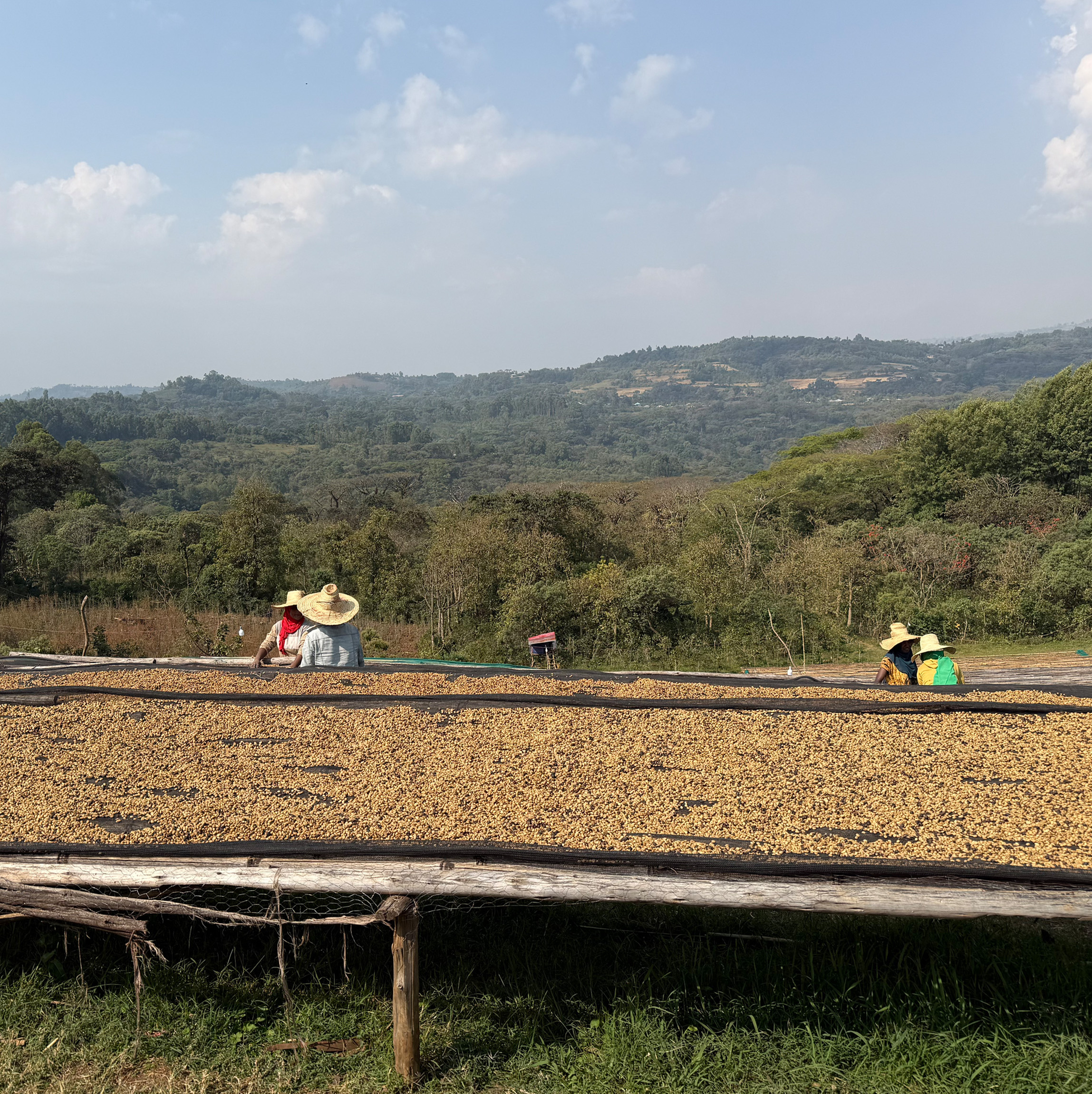
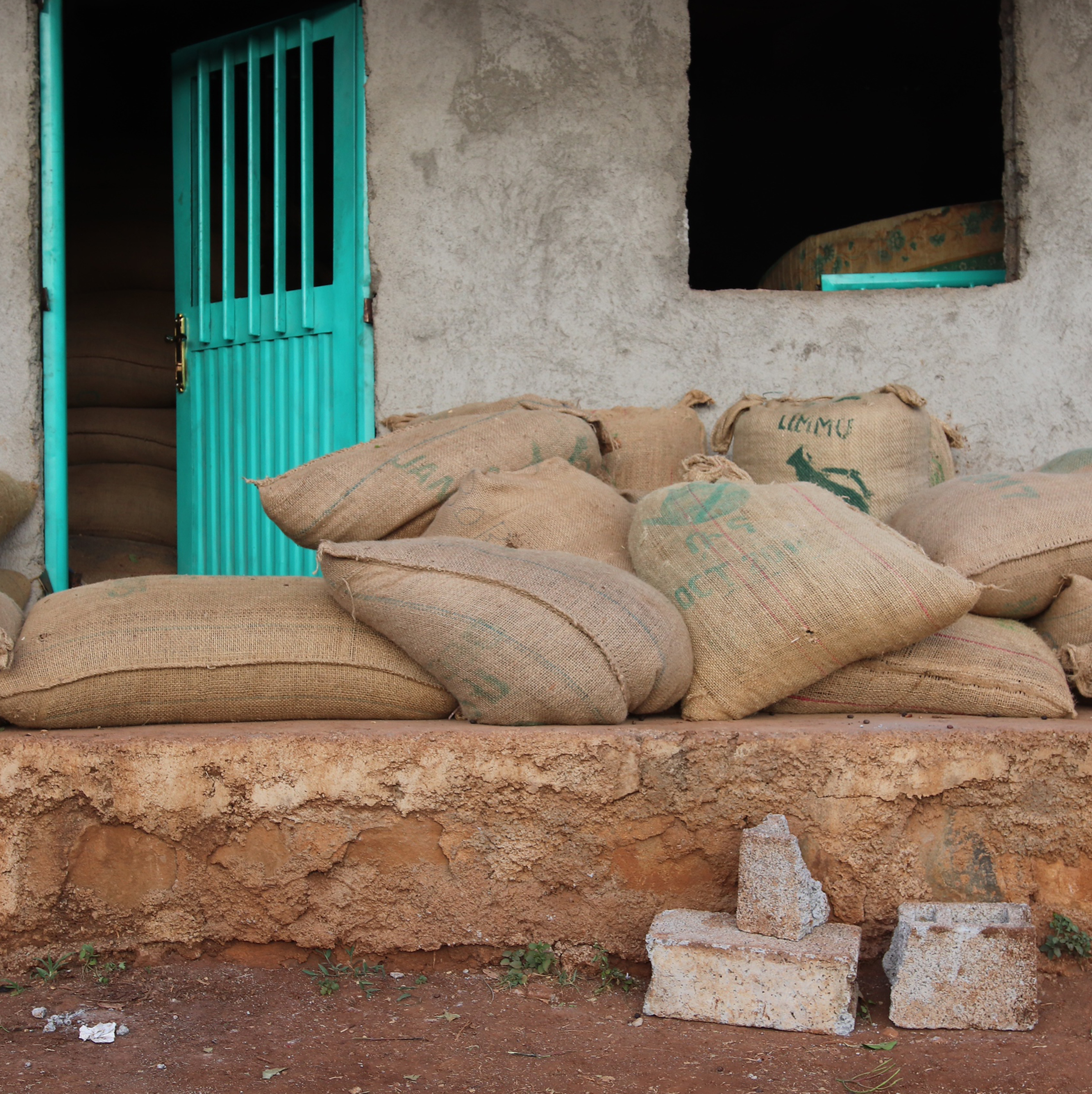
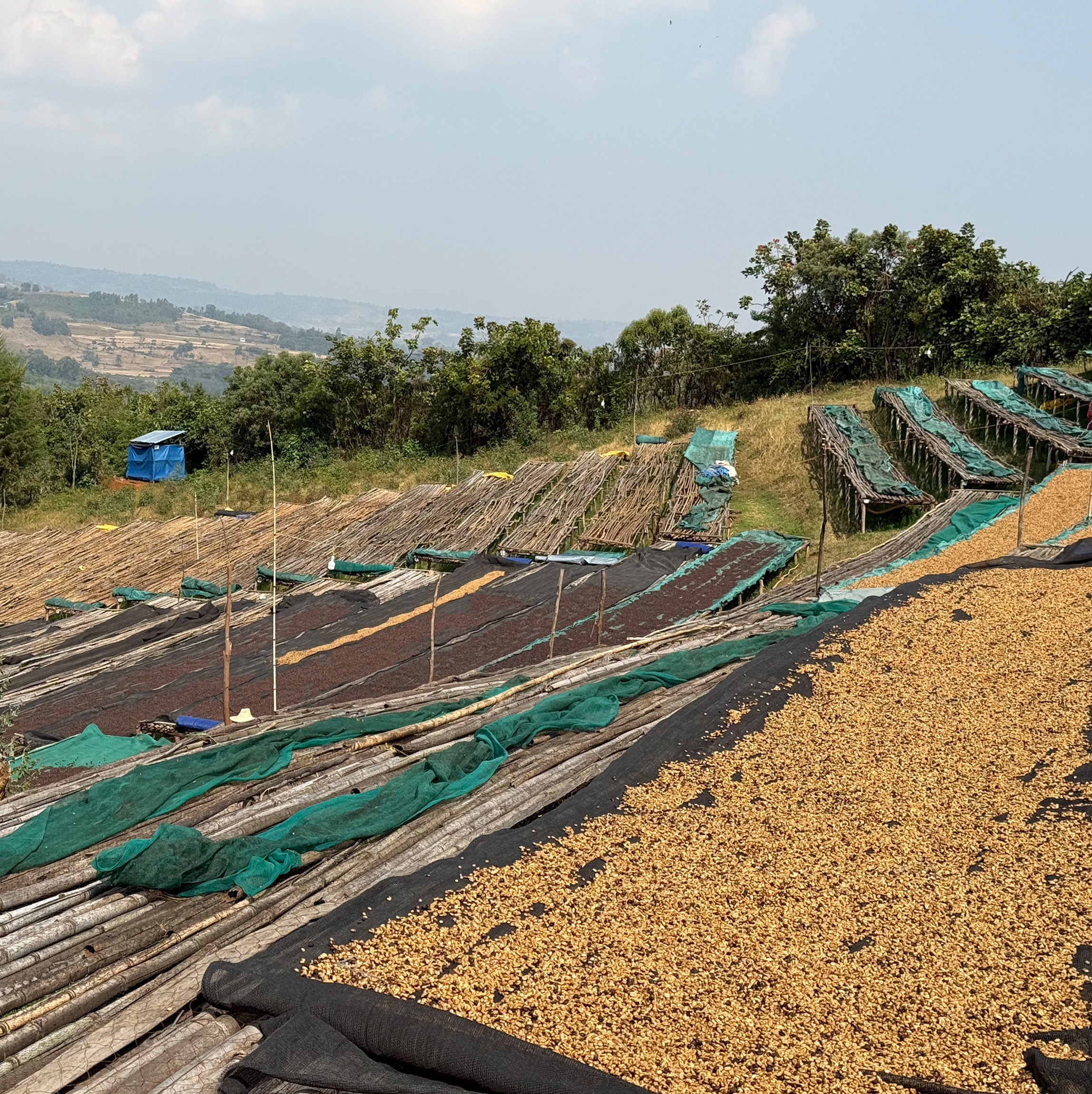
The coffee is then dried on raised beds for seven to ten days. During the hottest part of each day (approximately 11 am–2 pm), shade netting is used to slow the drying process and promote greater uniformity. Mustefa also maintains a small on-site laboratory equipped with a moisture meter, ensuring every lot reaches the target moisture level before being transported to his warehouse in nearby Agaro for storage and preparation for export.
This coffee was harvested between October 2025 and February 2026 before arriving in the UK in June 2026. We purchased it through Falcon Coffee, who have worked directly with Mustefa since 2020 to help improve quality and bring his coffee directly to the UK.
This is our first coffee from Mustefa Abakeno, and we're excited for it to be the beginning of a long-term relationship.


If you're not sure which coffee is for you, or you want to try them all, then our discovery pack is just what you need.
Shop now