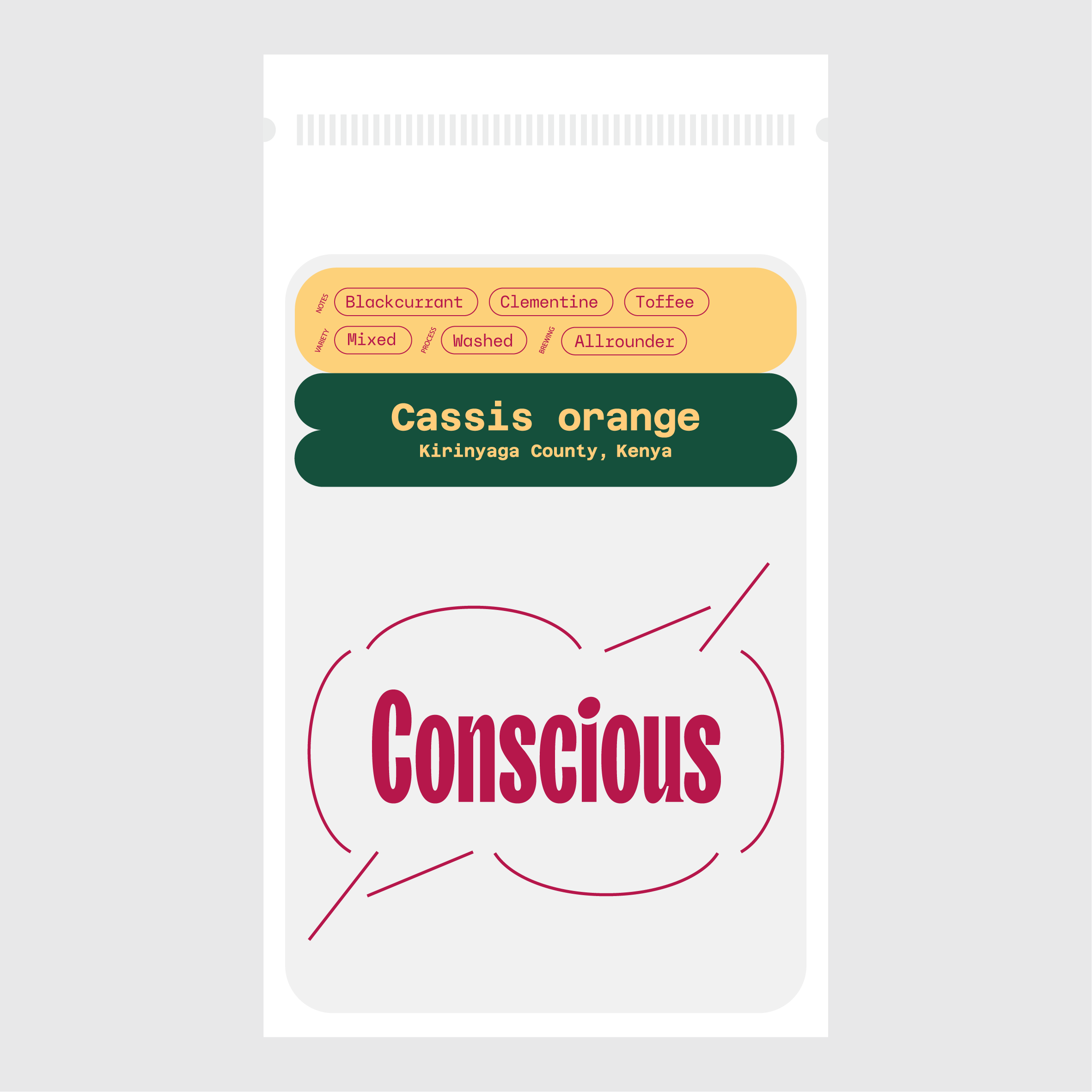
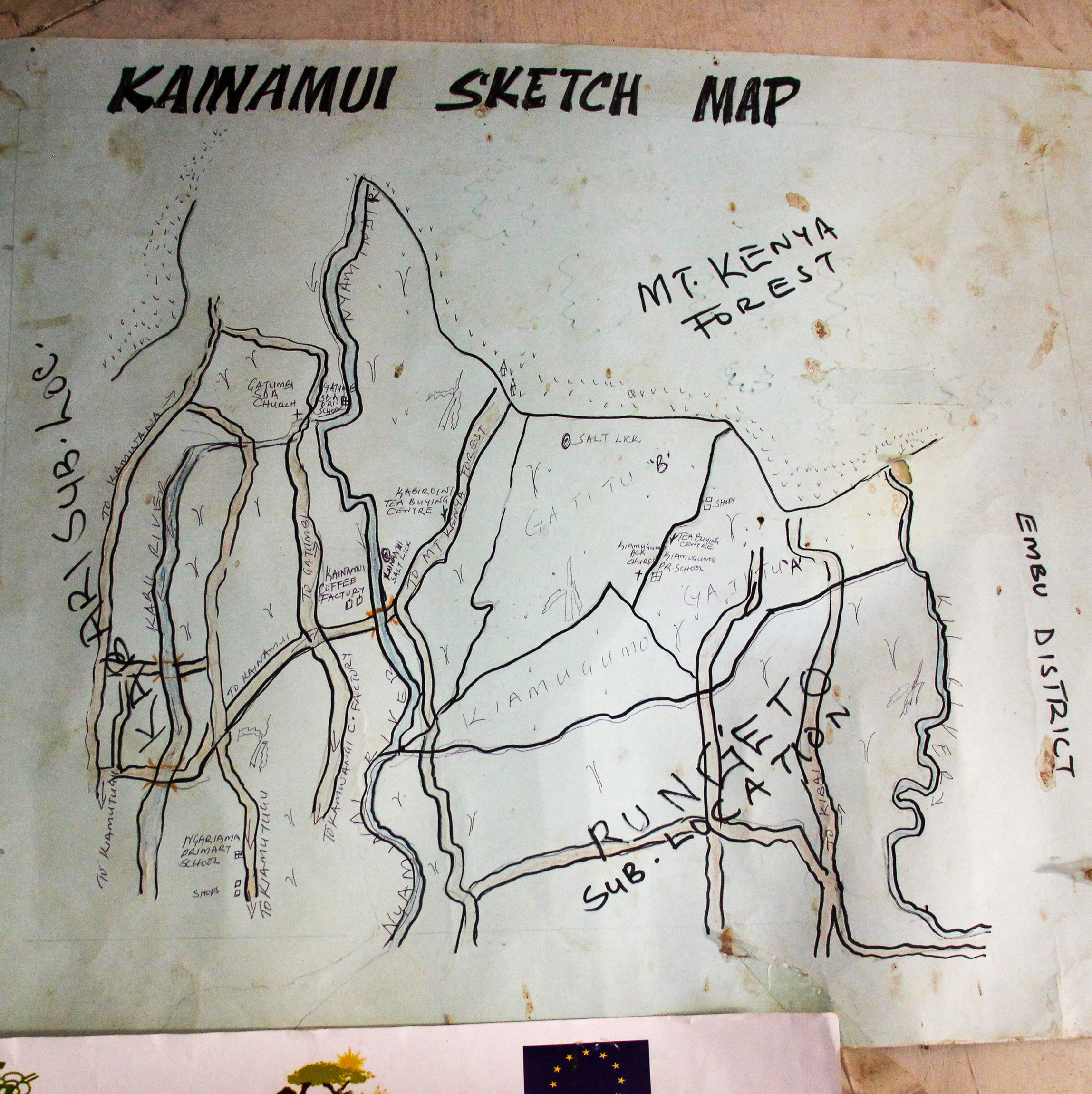
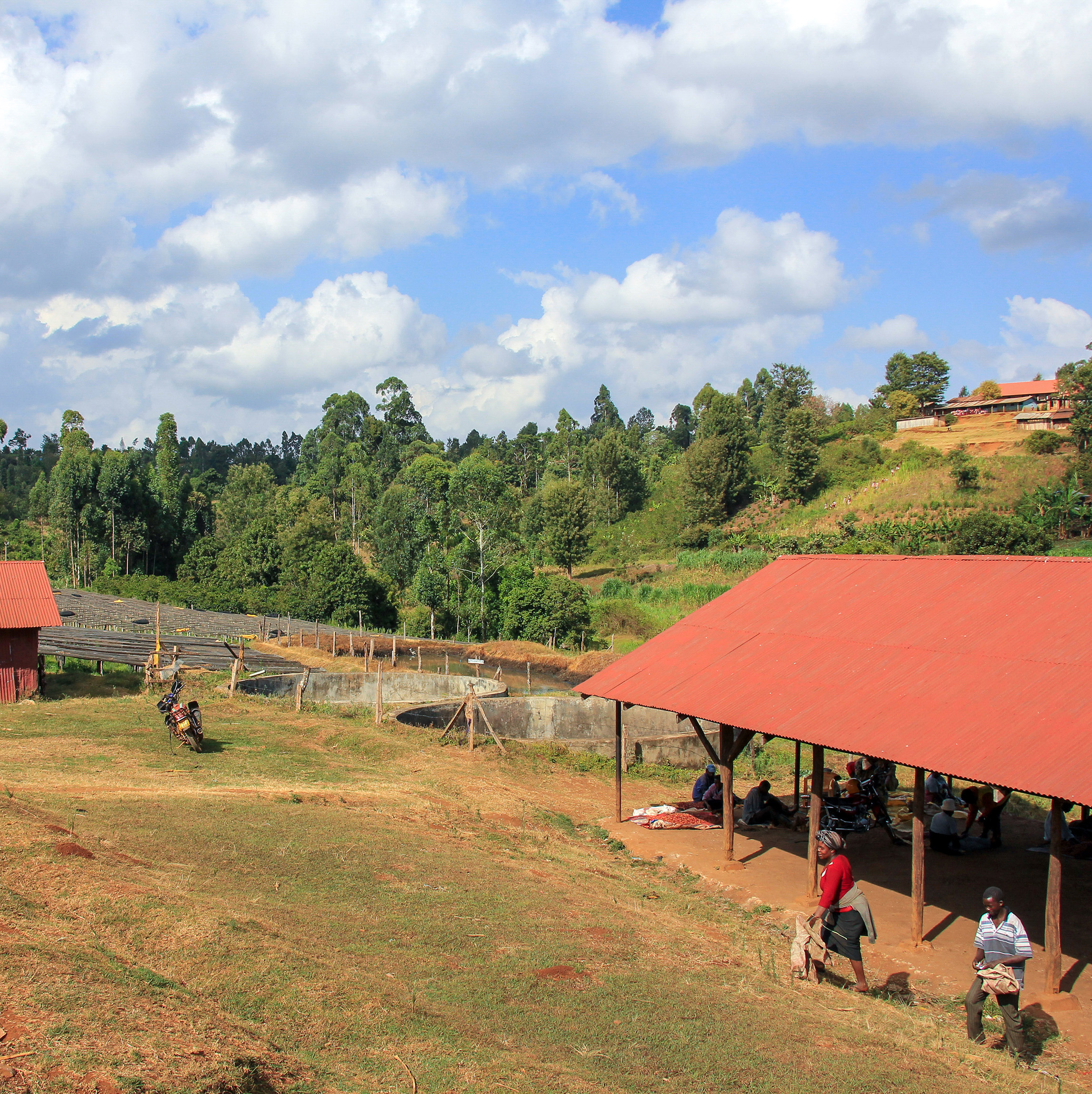


Bright, juicy and bursting with blackcurrant and freshly squeezed orange, this peaberry lot brings together coffees from around 2,000 smallholder farmers delivering cherries to Kainamui Factory, on the southern slopes of Mount Kenya. The region benefits from cool mountain evenings that slow cherry maturation, helping to produce the dense, vibrant coffees for which Kirinyaga County is renowned.
Established in 1963, Kainamui Washing Station (or “factory”, as washing stations are known in Kenya) is one of three factories operated by the New Ngariama Farmers Cooperative Society. The co-operative supports its members through pre-harvest financing, helping farmers plan and invest in the upcoming crop as well as cover expenses such as school fees.
Member producers cultivate an average of around 200 coffee trees at altitudes of up to 1,800 masl. Many of the farmers in Kirinyaga County are second-generation coffee producers, following agricultural reforms in Kenya during the 1950s and 60s that enabled smallholder farmers to purchase land and grow cash crops on their own farms, rather than being restricted to working on large estates.
This lot is made up primarily of SL-28 and SL-34, two of the most widely planted coffee cultivars in the region. Both were selected and distributed in Kenya through Scott Agricultural Laboratories in the early 20th century, from which their names are derived. The lot also contains smaller proportions of Ruiru 11 and Batian, two newer varieties developed to offer greater resistance to coffee diseases while maintaining good cup quality.
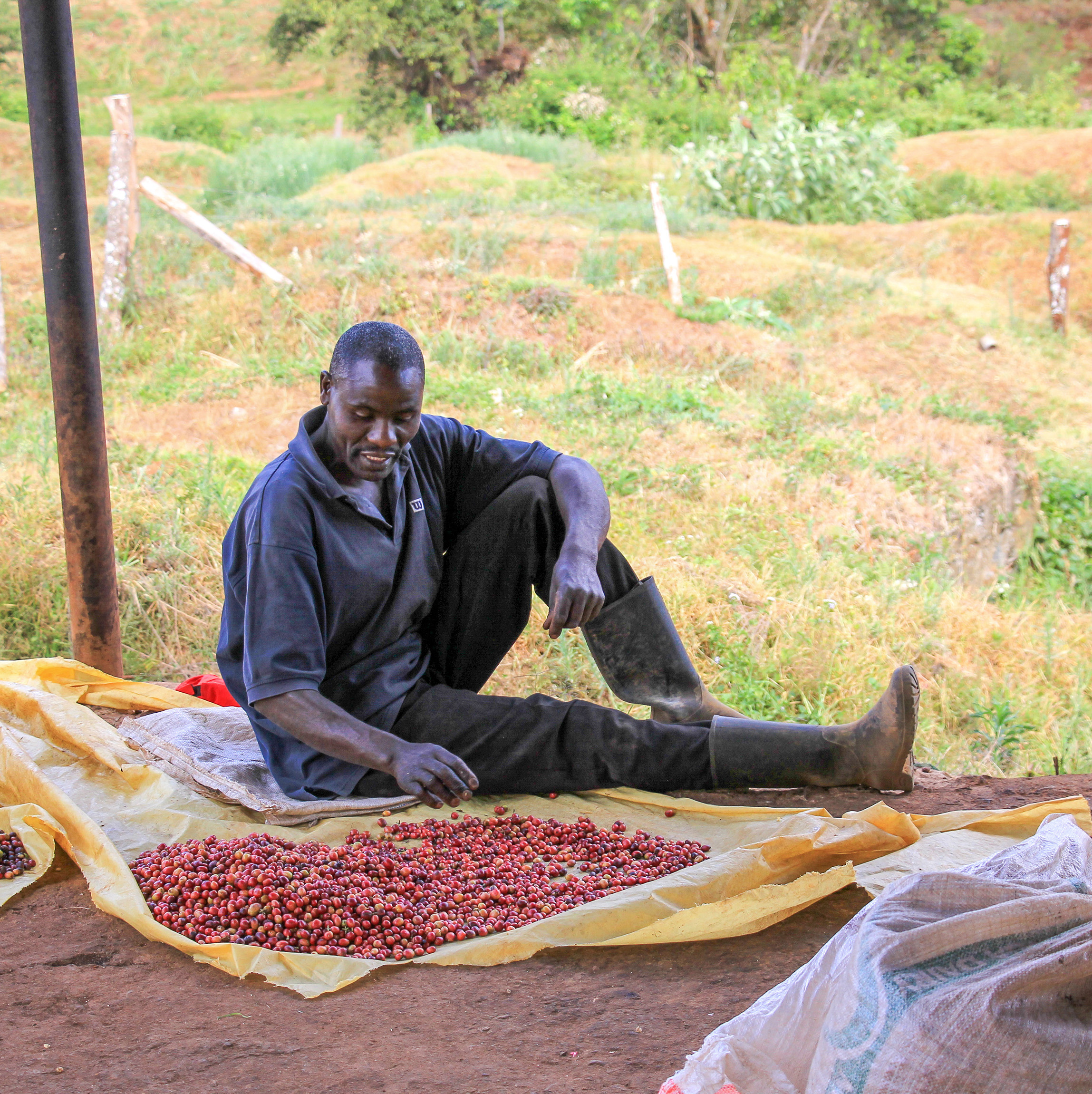
Once harvested, coffee cherries are delivered to Kainamui, where they are hand sorted to remove unripe and overripe cherries and any foreign material. The ripe cherries are weighed and recorded, and each farmer receives a receipt for their delivery. The cherries are then depulped and fermented for 24–36 hours in the shade. Following fermentation, the coffee is washed and graded by density in washing channels, separating the heavier beans from lighter beans.
The coffee is then transferred to raised drying tables, where it is sun-dried for 12–20 days depending on weather conditions and ambient temperature. During drying, the coffee is regularly turned to encourage even drying, while defective beans are identified and removed.
This coffee was harvested between October and December 2025 and landed in the UK in July 2026. We purchased it through the importer Café Imports, who sourced the coffee through Kenya’s coffee auction system.
During the harvest season, coffee is sold through weekly auctions at the Nairobi Coffee Exchange. Before each auction, lots are graded and samples are distributed by licensed marketing agents to registered exporters, allowing buyers to assess the coffees before submitting sealed bids. The auction system creates competition between buyers and provides a transparent route for coffees to be traded according to their quality and market value.


If you're not sure which coffee is for you, or you want to try them all, then our discovery pack is just what you need.
Shop now